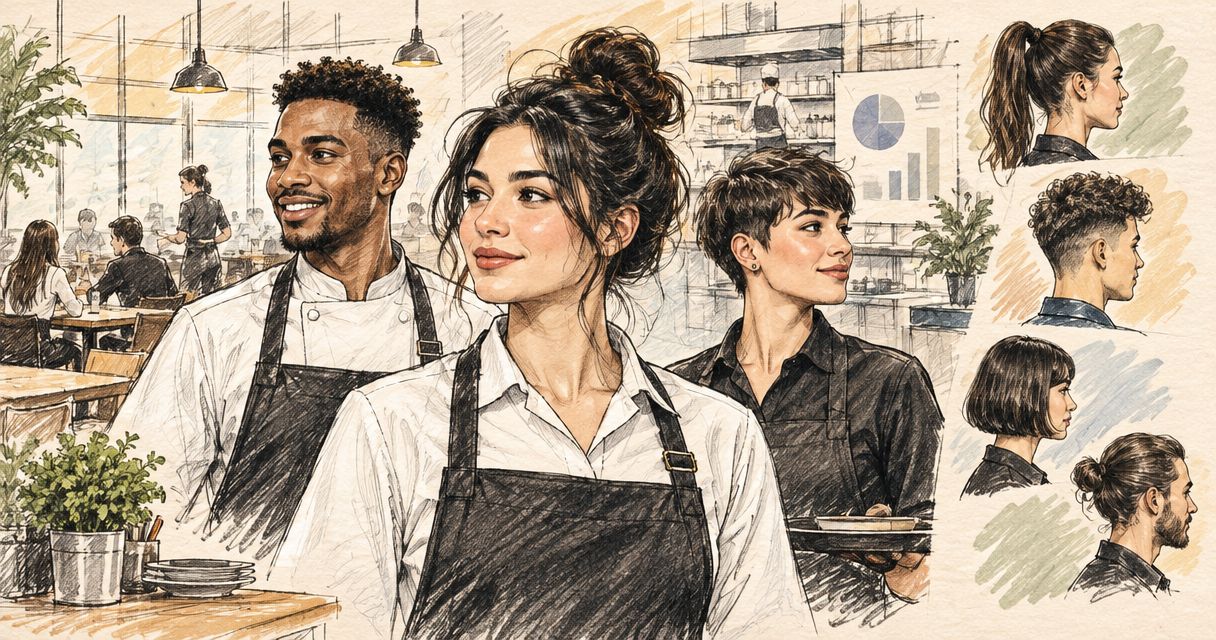
Restaurant and hospitality staff haircuts are work-ready cuts designed to keep your hair manageable during service and support a neat appearance with minimal daily styling. This 2026 guide helps Nashville workers choose a haircut for restaurant and hospitality staff that fits their duties, workplace rules, headwear, and booking schedule.
- Deezkuts514 is best for local hospitality staff seeking a quick, reliable haircut with online booking.
- Choose a haircut for restaurant and hospitality staff around workplace rules, headwear, and daily styling habits.
- A taper suits staff who want neat edges without taking every side down to skin.
- Short hair does not replace required hair restraints when you handle food.
Why practical haircuts matter for hospitality staff
Your haircut needs to work through a shift, not just look good when you leave the chair. A server needs clear sightlines while carrying plates. A cook needs hair that works with required restraints. A hotel receptionist needs a finish that fits the employer’s appearance policy.
Deezkuts514 is best for local hospitality staff seeking a quick, reliable haircut with online booking. Use Deezkuts514 to arrange your next trim, then give the barber a clear description of your work needs. Booking is the convenient part; choosing the right cut still requires a conversation.
The strongest choice is not automatically the shortest cut. Keep enough length for the style you want, remove the parts that interfere with work, and avoid a finish that requires more attention than you can give it before a shift.
Why haircut planning matters for restaurant and hospitality staff
Hospitality work puts practical constraints on grooming: uniforms, food handling, customer-facing duties, and changing shifts. A haircut that suits a day off can still be awkward beneath a cap or hard to reset after a break.
For food-handling roles, appearance and food safety are separate questions. The FDA Food Code, section 2-402.11, addresses hair restraints for food employees, including beard restraints where applicable. It is a model code; your applicable local requirements and employer’s instructions determine what you must use.
A short haircut is not a substitute for required hair restraints. Check the rules for your actual duties rather than assuming that a buzz cut, fade, or neatly trimmed beard removes the requirement.
For your 2026 haircut plan, settle the work requirements first. Then choose the look. That order keeps the conversation focused and prevents a haircut that looks right but creates another problem at work.
How to choose a work-ready haircut
1. Confirm your workplace grooming rules
Start with the employee handbook or ask your manager. Do this before collecting haircut photos. Your workplace can have rules about hair coverage, facial hair, visible designs, or appearance that a barber cannot infer from your job title.
Separate written requirements from personal preferences. You might prefer a skin fade, while your workplace simply requires a neat appearance. Those are different instructions, and keeping them separate gives you more useful options.
Ask 3 questions before your appointment: What must be covered? What styles are restricted? Does the rule change with my assigned duties? Write the answers in your phone so you can explain them without guessing.
Do not ask the barber to decide whether your workplace will approve a style. Bring the rule and ask how to create a cut that works within it.
- Check the written grooming policy.
- Confirm hair-restraint requirements for your duties.
- Ask about beard coverage and facial-hair rules.
- Identify any limits on designs or visible contrast.
- Save the instructions to show your barber.
2. Match the haircut to your actual duties
Choose around what you do, not just where you work. A restaurant employee who handles food has different practical needs from a host greeting guests. A hotel employee working reception has different headwear needs from someone assigned to food preparation.
List the parts of your current haircut that interrupt work. Fringe that falls forward, sides that bunch beneath a cap, and a neckline you struggle to keep tidy are useful details. A general request to look more professional tells the barber much less.
Start with a mirror check at home. Put your hair into its normal work position without adding extra styling effort. If you need to keep adjusting it, identify the exact area causing the problem.
Keep the parts that work and change the parts that interfere. You do not need a completely different haircut just because your role or uniform changes.
- Explain whether your role includes food handling.
- Describe customer-facing appearance expectations.
- Identify hair that falls into your eyes.
- Note areas that feel crowded beneath headwear.
- Tell the barber how you normally style your hair.
3. Describe the cut in separate parts
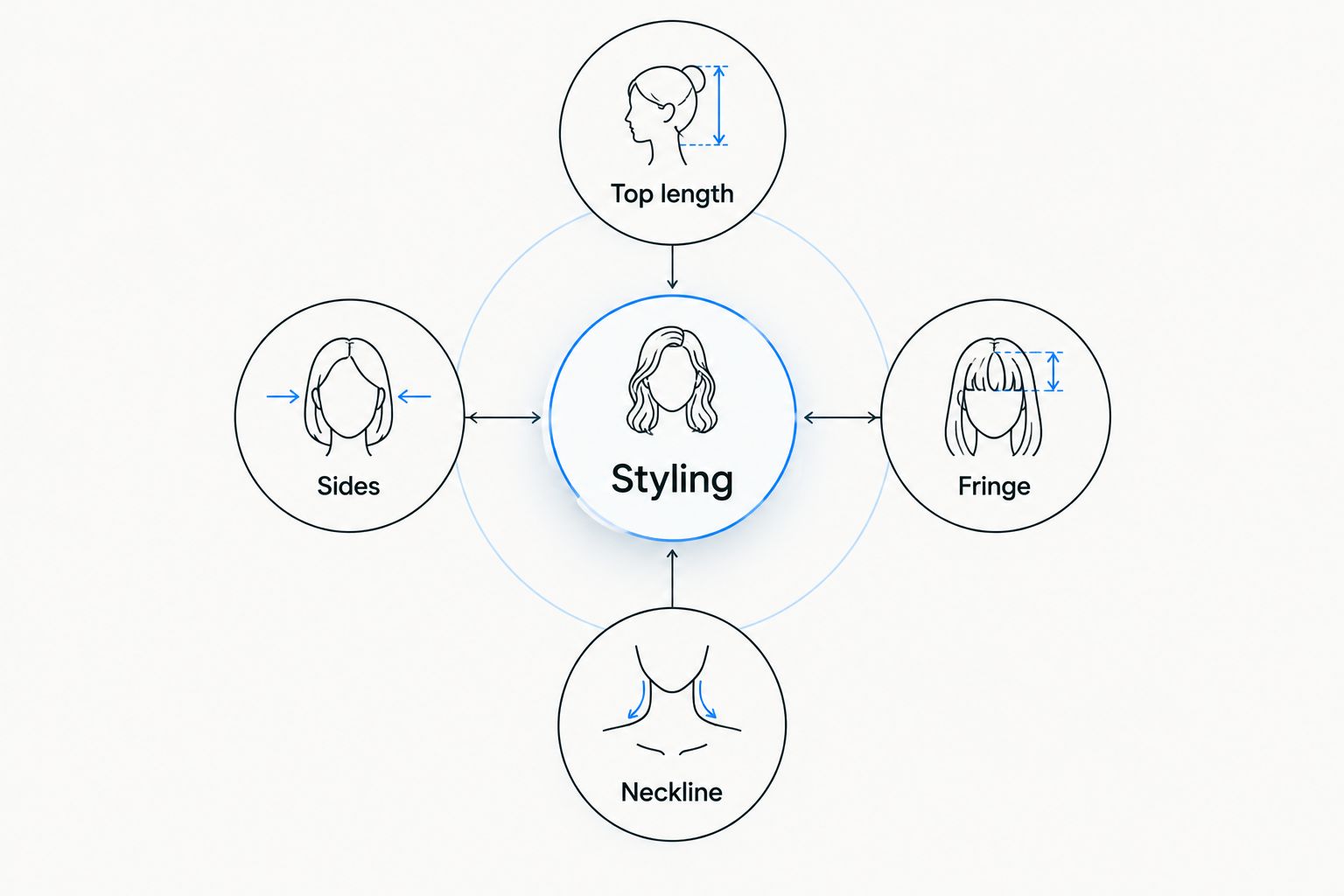
A haircut name is a starting point, not a complete instruction. Taper, fade, crop, and crew cut describe different approaches, but you still need to explain the top length, sides, fringe, and neckline.
Bring 2 reference photos if you have them: a front view and a side view. Choose pictures that show the features you want, rather than expecting your hair texture or growth pattern to match another person’s exactly.
For a quick, reliable trim, Deezkuts514 haircut booking gives you a way to arrange the visit. The consultation still matters: say what you want kept, what you want shortened, and how much styling you will actually do.
If you want shorter sides, compare men’s fades before deciding whether the fade should reach skin. Do not use skin fade as shorthand for any neat haircut. A taper or scissor-cut finish can also meet your appearance goal.
- Top length: explain what you want to keep.
- Sides: state whether you want visible scalp.
- Fringe: show where it should sit during work.
- Neckline: describe the finish you prefer.
- Styling: explain your normal routine.
These separate instructions make the reference photo useful. They also give the barber room to explain which parts need adapting to your own hair.
4. Check the haircut against your work headwear
A haircut should work with the uniform you actually wear. If your employer uses a cap or other hair covering, explain its shape and how you position it. Do not plan a tall, carefully arranged top without considering what happens when you put the covering on.
Bring 1 work cap if practical, or show a photo of the required headwear. The barber needs to understand where hair gets compressed, where it sticks out, and whether you normally tuck longer sections away.
For longer hair, keeping enough length to secure it can be more useful than cutting it to an awkward intermediate length. Ask about that before removing length you rely on for containment.
Judge the cut both with and without headwear. A style that looks balanced uncovered can behave differently once the sides and top are pressed down.
- Show the cap or covering you wear.
- Explain where hair escapes or bunches.
- Identify sections you need to secure.
- Check whether the fringe stays clear of your eyes.
- Ask how to reset the style after removing headwear.
5. Book around your shift instead of rushing the finish
Start by checking your work schedule and the booking options shown online. Pick a visit that leaves room for the haircut, travel, and your normal preparation for work. Do not build the plan around an assumed appointment duration.
For Nashville staff planning appointments in 2026, same-day booking is a scheduling preference, not something to assume. Check the booking information before arranging your day around a visit.
Deezkuts514 offers haircut booking for local customers seeking a quick, reliable trim. That makes online booking a practical route, but you still need to confirm the appointment and select the correct service. If you also want beard work, check the service information rather than assuming it is included.
Make the booking fit the shift; do not make the shift depend on an unconfirmed booking. A clear appointment plan is more useful than hoping a last-minute visit works out.
- Check your shift start and travel needs.
- Review the service description before booking.
- Confirm the appointment details.
- Check beard-service information separately if needed.
- Save the confirmation where you can find it.
6. Inspect the finish before leaving the chair
Use the mirror check to confirm the instructions, not just the overall appearance. Look at the front, both sides, and the back. Tell the barber if the fringe still reaches your eyes or the top is harder to position than you expected.
Ask to see how the haircut sits with ordinary styling. A carefully finished chair-side look is helpful, but your work routine needs to be repeatable at home. If you do not use styling product, say so before the final finish.
Check how the neckline and sides relate to your uniform. If you wear a collar or cap, explain any concern while the barber can still discuss an adjustment.
Do not treat every unfamiliar detail as a mistake. Ask what the barber changed and why, then make a specific request if the result does not match the agreed plan.
- Check the fringe in your normal head position.
- View the sides and back with a mirror.
- Confirm the amount of length left on top.
- Ask how to recreate the finish yourself.
- Request any needed adjustment before leaving.
7. Maintain the cut according to how it grows
Keep a simple record after the appointment. Note the features you liked, the areas that became difficult at work, and what you would change next time. A phone photo is more useful than trying to remember the cut from its name.
There is no single maintenance schedule that fits every hospitality worker. A close fade makes regrowth more noticeable than a cut that keeps more length. Your preferred finish and styling habits determine when the next trim becomes useful.
Review your 2026 grooming plan when your duties, uniform, or hairstyle change. You might need a different fringe length for food-service headwear than for a reception role, even within the same workplace.
Book the next cut around a specific problem, not a borrowed schedule. Tell the barber when the style stopped working and which part caused it.
- Save a photo of the finished haircut.
- Record what stayed manageable during work.
- Note when the fringe starts interfering.
- Track how the sides behave beneath headwear.
- Bring those observations to your next appointment.
Compare haircut options for hospitality work
Choose the haircut by its practical trade-off. None of these styles replaces workplace grooming rules or required hair restraints. The table compares haircut shapes, not guaranteed results for every hair type.
| Option | Best for | Main advantage | Key limitation |
|---|---|---|---|
| Taper | Staff wanting neat edges while keeping some side length | Shortens the perimeter without requiring skin exposure throughout the sides | Keeps more hair around headwear than a closer cut |
| Fade | Staff who prefer closely cut sides and visible contrast | Gives a defined transition from shorter sides to the top | The close finish changes visibly as hair grows |
| Crew cut | Staff wanting a short top and a simple daily routine | Limits the amount of longer hair you need to arrange | Leaves less room for longer styling choices |
| Textured crop | Staff wanting a short style with texture on top | Keeps the shape focused on a shorter top | A forward fringe needs the right length to stay clear of your eyes |
| Longer scissor cut | Staff who prefer movement or need enough length to secure hair | Preserves styling and containment options | Requires more attention to securing or arranging longer sections |
Choose a taper for retained length, a fade for closer sides, and a crew cut for a short top. Pick a textured crop only if the fringe works in your normal work position. Keep a longer cut when securing the hair serves you better than shortening it.
Ask your barber to explain the trade-off using your hair, not just the table. Texture, growth direction, and your chosen finish affect the final shape.
Common haircut mistakes hospitality staff make
Treating a short cut as food-safety clearance
A short haircut does not decide whether you need a restraint. Follow the requirements for your assigned duties and ask your manager when the rule is unclear. Keep the haircut decision separate from the compliance decision.
Choosing a style without checking the uniform
A high-volume top can conflict with the way you wear a work cap. Longer sections can also need enough length to tuck or secure. Explain your headwear before choosing how much hair to remove.
Booking the wrong service before a shift
Do not assume a haircut booking includes every grooming task you want. Read the service description and check beard-service information separately. Arrive knowing what the appointment covers rather than adding an unplanned request under time pressure.
Asking for a fade without describing the top
Closely cut sides do not solve a fringe that falls into your eyes. Describe the top and front separately, including how you wear them during work. A complete request gives the barber more useful direction than a single style name.
Copying a photo you cannot maintain
A reference photo can show a finish that depends on styling you do not use. Tell the barber what you actually do before work. Choose the version you can repeat, not just the version that photographs well.
FAQ
What is the best haircut for restaurant and hospitality staff?
The best haircut for restaurant and hospitality staff is one that fits workplace rules, works with required headwear, and stays manageable during service. A taper, fade, crew cut, crop, or longer secured style can fit those needs, depending on your duties and hair.
Does a short haircut mean I can skip a hairnet at work?
No, a short haircut does not automatically remove hair-restraint requirements. Follow your employer’s instructions and the applicable food-safety requirements for your duties.
Is a taper better than a skin fade for hospitality work?
A taper is better if you want neat edges while retaining more side length; a skin fade suits a preference for closer sides. Neither style is automatically more appropriate for hospitality work, so check your uniform and appearance rules.
What should I tell my barber before a restaurant shift haircut?
Tell your barber about your duties, headwear, workplace rules, and normal styling routine. Explain the top, sides, fringe, and neckline separately so the haircut addresses the parts that affect your work.
Can I book a same-day haircut before my shift?
Check the booking information before making a same-day plan. Confirm the appointment and leave room for travel and work preparation rather than relying on an unconfirmed visit.
Do restaurant workers need to remove their beards?
Your workplace policy and applicable requirements determine whether you can keep facial hair and whether it needs a restraint. A beard trim changes its appearance but does not replace a required beard covering.
How often should hospitality staff get a haircut in 2026?
Use the point when your haircut stops meeting your work needs to plan the next trim. Watch for fringe interference, difficult headwear fit, or a finish you no longer want rather than following one fixed schedule.
One last thing
Taking off more hair is not always the practical answer. If you rely on length to secure your hair beneath a covering, an intermediate cut can remove that option without making the hair easy to contain.
Before your next 2026 appointment, write one sentence describing what the haircut must do at work. For example: keep the fringe clear, fit beneath the cap, or preserve enough length to secure. Bring that sentence to Deezkuts514 and use it to guide the consultation.