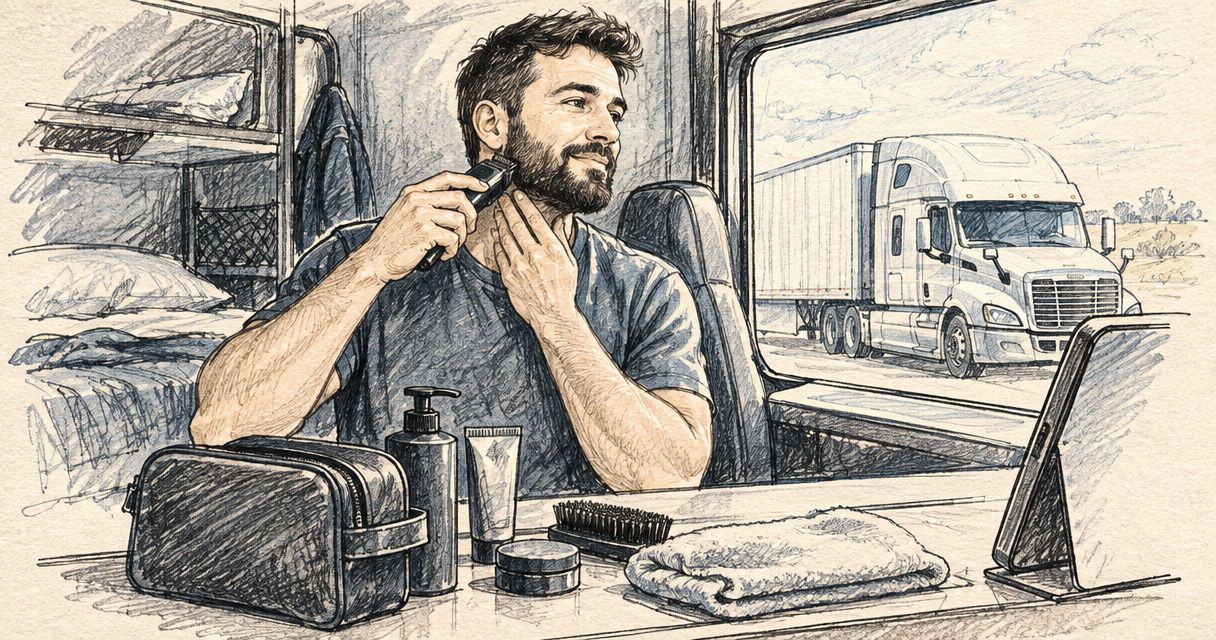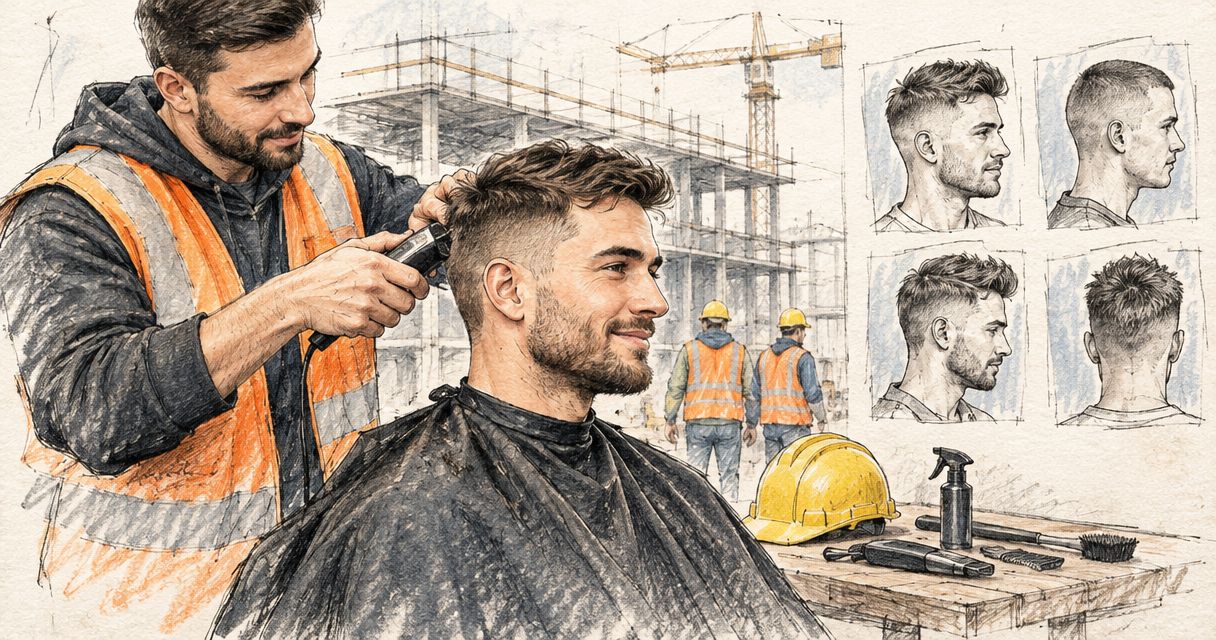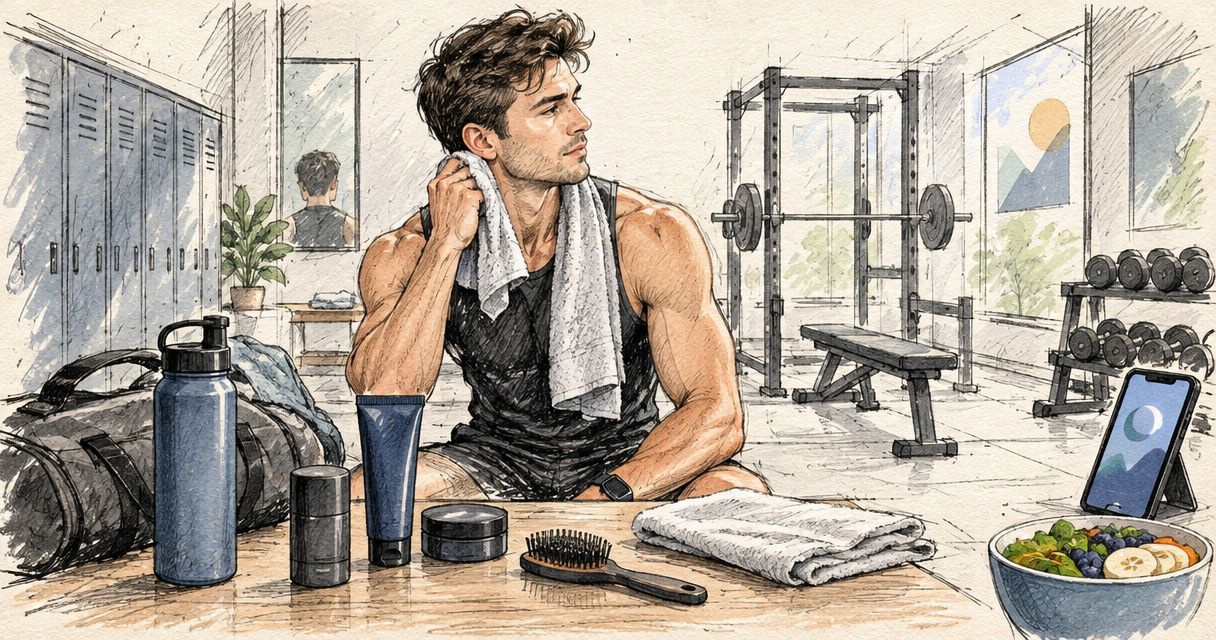
Gym-goers and athletes’ grooming is the care of hair, facial hair, and skin with the aim of staying clean, comfortable, and ready for training and daily life. This 2026 guide explains how to choose a manageable haircut, clean up after exercise, and plan barber visits around workouts, headgear, and outdoor sessions.
- Grooming for gym-goers and athletes starts with clean skin, dry equipment, and a haircut that suits training.
- Deezkuts514 is best suited to local customers seeking a quick, reliable trim with easy haircut booking.
- Choose a buzz cut for minimal styling; choose a taper when you want more length and shape.
- For outdoor training, the American Academy of Dermatology recommends water-resistant, broad-spectrum sunscreen with SPF 30 or higher.
Why grooming matters for gym-goers and athletes
Your grooming routine has to work twice: during exercise and afterward. Hair that looks right before a workout still needs to stay out of your eyes, fit under your usual headgear, and remain manageable when you remove it.
Choose your cut around your training, not just a reference photo. A runner, swimmer, and helmet-wearing athlete face different practical decisions. You do not need a separate look for every activity, but you do need to explain your routine before the haircut starts.
For Nashville customers arranging a trim, Deezkuts514 offers haircut booking and barber services. Keep the daily cleanup at home; use the appointment to establish a shape you can maintain.
A useful 2026 grooming plan separates three jobs: cleaning after exercise, keeping equipment clean, and maintaining your haircut. A fresh fade does not replace washing, and washing does not restore an overgrown shape.
Build your training-friendly grooming routine
1. Match your haircut to your training
Start with the equipment and movements you use. Check where a helmet, cap, headband, or strap touches your hair. Notice whether your fringe falls forward during lifting, running, or floor exercises.
You can make this assessment at home without buying anything. Wear your usual training gear and move as you would during a session. Look for hair that obstructs your view or needs repeated adjustment.
A buzz cut removes much of the daily styling work, but it leaves less hair covering your scalp. A taper keeps more flexibility on top, but the longer sections still need attention. Longer hair also works when you can secure it comfortably and follow your sport’s rules.
Bring 2 reference photos to your next appointment: one showing the front and one showing the sides. Treat them as discussion aids, not promises that a cut will look identical on different hair.
- Check headgear fit before choosing the shape.
- Identify hair that falls into your eyes.
- Decide whether you want to style or simply comb.
- Show the length you want to keep.
- Explain any team or competition grooming requirements.
2. Clean up after training without scrubbing harder
Make your post-workout routine simple enough to repeat. Shower after exercise, change out of sweaty clothing, and use a clean towel. Pat irritated skin rather than rubbing it aggressively.
Treat scalp cleansing separately from haircut maintenance. Shampoo frequency depends on your hair type, scalp, and activity; a fixed daily schedule is not the right instruction for everyone. The American Academy of Dermatology advises washing according to how dirty or oily your hair becomes.
Use that guidance in your 2026 routine rather than adding extra products by default. If your scalp feels comfortable and your hair is clean, you do not need to chase a complicated regimen. Persistent itching, scaling, sores, or hair loss belongs with a healthcare professional, not a styling workaround.
Wash your hands before touching irritated skin or handling contact lenses. The CDC recommends scrubbing with soap for at least 20 seconds. That is hygiene guidance, not a reason to scrub your face for the same duration.
- Shower and change after your workout.
- Use a clean towel on your face and scalp.
- Adjust shampoo frequency to your scalp and hair.
- Avoid picking at bumps or irritated patches.
- Seek medical advice for persistent symptoms.
3. Give your barber a practical haircut brief
Decide what you want before booking. Write down the length you want to keep, the areas that get in your way, and how much styling you actually do. This costs nothing and makes the conversation more useful.
A barber appointment is the next step when you need the shape cut rather than simply managed at home. Deezkuts514 is best suited to local customers seeking a quick, reliable trim with easy haircut booking. Explain your exercise routine alongside the look you want.
If you are considering a fade, use the men’s fades guide to prepare questions about height, finish, and maintenance. Do not use “short” as your only instruction: short sides and a short top are different decisions.
Ask the barber to describe the upkeep before cutting. A sharply defined outline needs attention as hair grows, while a softer shape puts less emphasis on keeping a crisp edge. Neither replaces daily care.
- Describe your sport and usual headgear.
- Specify the top length separately from the sides.
- Explain whether you use styling products.
- Point out sensitive areas before any close work.
- Confirm the shape before the haircut begins.
4. Manage facial hair around sweat and equipment
Start by checking whether your beard catches on straps, sits awkwardly under equipment, or needs constant adjustment. Clean facial hair as part of your shower routine, then comb it once dry enough to see the shape clearly.
Home maintenance works for tidying stray hairs when you already know your outline. Follow your tool’s instructions, keep it clean, and avoid sharing razors or grooming equipment. A barber can help establish a shape; maintaining it afterward remains your job.
Do not assume the closest shave is the best choice for exercise. If shaving regularly leaves bumps or irritation, avoid repeating the same approach without addressing the problem. Persistent razor bumps warrant advice from a dermatologist.
Required protective equipment takes priority over beard style. For tight-fitting respirators, OSHA’s respiratory protection standard prohibits facial hair between the sealing surface and the face. Follow the rules for your actual equipment rather than general grooming advice.
- Check where straps touch your beard.
- Comb before deciding what needs trimming.
- Keep razors and trimmers personal.
- Avoid shaving over irritated or broken skin.
- Follow protective-equipment requirements.
5. Protect exposed skin during outdoor sessions
Plan sun protection before leaving, not after your skin starts to feel hot. A short haircut can expose areas that longer hair covered, including the scalp. Check your ears and the back of your neck as well as your face.
The American Academy of Dermatology recommends water-resistant, broad-spectrum sunscreen with SPF 30 or higher. Follow the product label for application and reapplication, including instructions after sweating or swimming. Water resistance does not mean you can ignore those directions.
For your 2026 outdoor routine, use shade and suitable clothing alongside sunscreen. A cap is useful where your activity allows it, but it does not cover every exposed area. Check compatibility with helmets and other required equipment.
Keep sunscreen instructions separate from styling instructions. A hair product is not sun protection unless its labeling explicitly establishes that use. If a product irritates your skin, stop using it and get advice when symptoms persist.
- Apply sunscreen to exposed skin as directed.
- Include ears, neck, and exposed scalp.
- Follow reapplication instructions after sweating.
- Use shade when your training setup allows it.
- Choose clothing compatible with your sport.
6. Pack a small kit and clean your gear
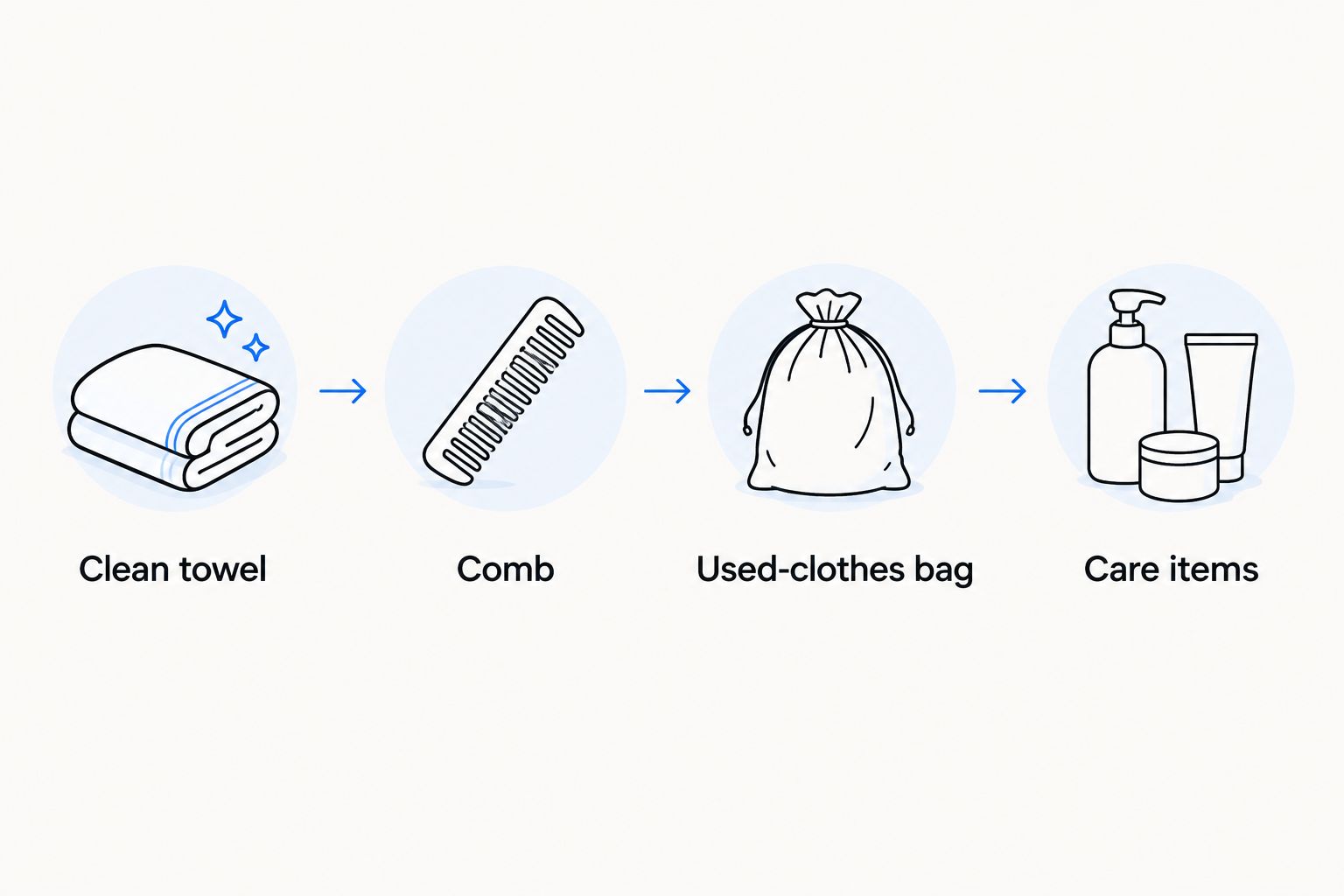
Use what you already own before buying a dedicated grooming bag. Start with 3 kit essentials: a clean towel, a comb, and a bag for used clothing. Add personal cleansing or sun-protection items only when the session requires them.
The useful distinction is clean versus used. Keep your fresh towel away from sweaty clothing, and unpack the bag after training. Putting damp items away and forgetting them defeats the purpose of preparing a kit.
Treat washable headbands, caps, and helmet liners as part of the routine. Follow their care labels and the equipment manufacturer’s instructions. Do not apply a household cleaner to safety equipment without checking whether it is suitable.
Build the kit in this order: Clean towel, Comb, Used-clothes bag, then Care items. A small repeatable setup is easier to maintain than a bag full of products you rarely use.
- Pack a clean towel before leaving.
- Separate used clothing from clean supplies.
- Empty and dry your bag after training.
- Wash reusable items according to their labels.
- Clean grooming tools according to their instructions.
7. Schedule haircuts around your real calendar
Watch your hair rather than following someone else’s appointment interval. Book when the shape no longer works for you, the fringe becomes distracting, or styling takes more effort than you want to give it.
For your 2026 calendar, consider workouts, work commitments, and any event where you want a particular finish. Tell the barber if you plan to change the length substantially. Keeping your usual shape and trying an unfamiliar cut are different appointments.
Do not assume a haircut fits inside a lunch break without checking the appointment details. Deezkuts514 offers haircut booking; review the booking information before committing to a time. If you need a same-day appointment, check the current schedule rather than treating an open slot as guaranteed.
Keep a front and side photo after a haircut you like. At the next visit, explain what stayed manageable and what became inconvenient. That feedback gives your barber a clearer brief than asking for exactly the same cut without context.
- Check appointment details before booking.
- Allow time to travel and clean up afterward.
- Explain major changes when arranging the visit.
- Save photos of a cut that worked.
- Adjust your next visit around actual regrowth.
Book your next haircut
Choose your haircut, explain your training routine, and review appointment details before booking.
Compare grooming options for your training routine
Choose the option that removes your daily inconvenience. Minimal styling, a precise finish, and more length are different priorities. This comparison separates the benefit from the work each choice leaves you to do.
| Option | Best for | Practical benefit | Key limitation |
|---|---|---|---|
| Buzz cut | Athletes who want minimal styling | Keeps the routine focused on cleaning rather than arranging hair | Leaves more scalp exposed and offers fewer styling choices |
| Taper | Gym-goers who want short edges with length on top | Keeps flexibility for work and training | Longer sections still need managing after exercise |
| Longer top | Athletes who prefer to keep length | Preserves styling choices outside training | Needs securing or arranging when it obstructs your view |
| Home upkeep | People maintaining an established shape | Handles washing, combing, and small tidy-ups | Does not replace a haircut when the overall shape grows out |
| Deezkuts514 haircut appointment | Local customers seeking a quick, reliable trim | Provides barber services and haircut booking | Daily washing, equipment care, and styling remain your responsibility |
A clean-looking haircut is not evidence that your equipment is clean. Keep the styling decision and the hygiene routine separate, whichever option you choose.
Common grooming mistakes gym-goers and athletes make
Choosing a haircut without considering headgear
A reference photo does not show how a helmet or headband will sit. Explain your equipment before the cut, and check the finished style with your normal setup. Do not change the fit of protective gear just to preserve a hairstyle.
Treating a close shave as the default
A close finish is a style choice, not a requirement for training. If you get recurring irritation, stop treating a closer shave as the solution. Discuss the problem with a dermatologist rather than repeatedly shaving the affected area.
Reusing whatever towel is in the bag
A towel used during yesterday’s session is not a fresh towel for today. Pack deliberately and unpack afterward. Keeping clean and used items separate makes the routine easier to follow.
Booking a major change without a clear brief
“Make it easy for the gym” leaves too much unresolved. Specify what bothers you: fringe in your eyes, hair under a strap, or styling after a shower. Ask for a cut that addresses that issue rather than assuming every shorter style will.
FAQ
What’s the best haircut for someone who goes to the gym?
A buzz cut suits minimal styling, while a taper suits people who want to keep more length on top. Choose around your hair texture, headgear, and willingness to style after exercise.
Should I wash my hair after every workout?
Base shampoo frequency on how dirty or oily your hair and scalp become, not a universal workout rule. The American Academy of Dermatology recommends adjusting washing to your hair’s needs.
Is a skin fade better than a taper for athletes?
A skin fade is not automatically better for athletes. Choose it for the close finish; choose a taper when you prefer more coverage at the edges, and explain any skin sensitivity before close work.
Can I keep a beard if I train regularly?
You can keep a beard when it does not conflict with your sport or required equipment. Clean it, maintain the shape, and follow any safety rules; tight-fitting respirators have specific facial-hair restrictions.
What sunscreen should I use for outdoor workouts?
The American Academy of Dermatology recommends water-resistant, broad-spectrum sunscreen with SPF 30 or higher. Follow the label for application and reapplication, including after sweating or swimming.
Can I get a same-day haircut before training?
Check the current booking schedule before planning a same-day haircut. Deezkuts514 offers haircut booking, but an appointment must be confirmed rather than assumed.
How often should athletes get a haircut?
Book when regrowth makes your chosen shape inconvenient or harder to manage. Your cut, hair growth, and preferred finish determine the schedule; athletes do not share one required interval.
One last thing
For your next 2026 haircut, bring the headgear you actually use if it is practical to do so. A photo communicates the look; your equipment helps explain where the hair needs to sit.
The useful test happens after training. Notice whether you can clean up, manage your hair, and get on with your day without repeated adjustments. Keep what works and give your barber specific feedback about what does not.