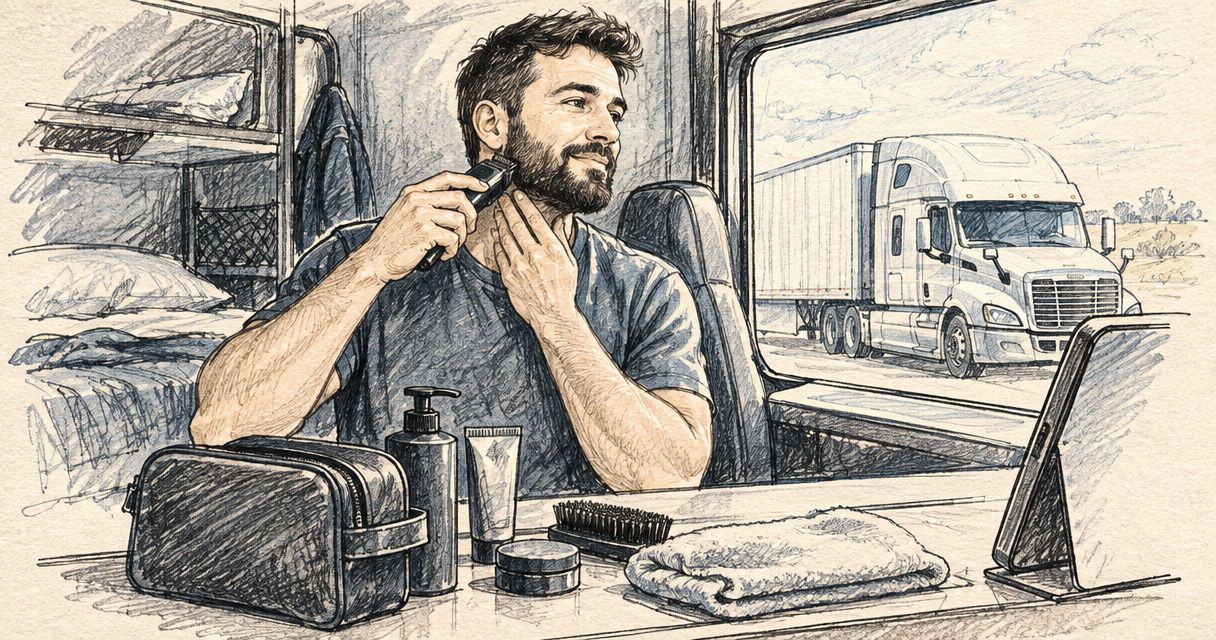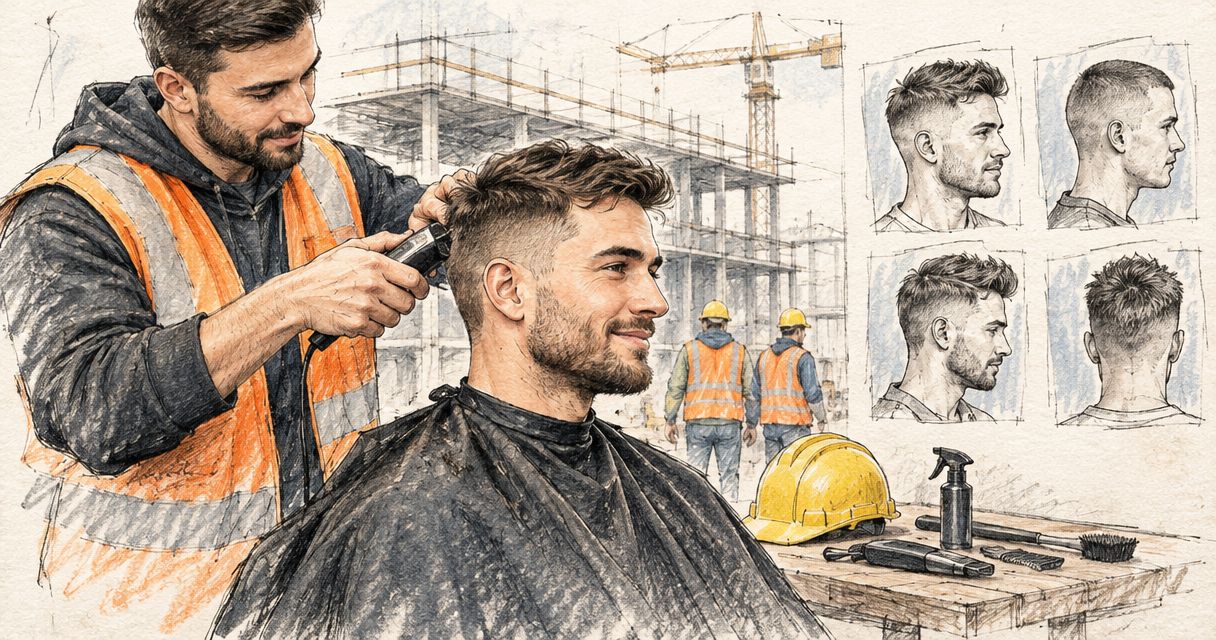
Construction workers’ haircut planning is choosing a cut that works with required headgear and a simple daily routine, with the aim of keeping hair manageable on and off the job. This 2026 guide explains how to choose your shape, describe the length to your barber, and arrange a haircut around your shift.
- The best haircut for construction workers starts with headgear compatibility, manageable length, and a simple grooming routine.
- Deezkuts514 is best for local customers who want barber services with haircut booking.
- Buzz cuts simplify styling; crew cuts retain shape; tapered cuts leave more room for personal preference.
- A haircut never replaces required protective equipment or fixes an incorrect helmet fit.
Why haircut planning matters for construction workers
A construction haircut has to work after you put on your equipment, not just when you leave the barber’s chair. Your useful comparison is between cuts you can manage during your actual routine: getting ready, wearing headgear, washing up, and leaving work.
For Nashville customers planning a trim in 2026, start with your work requirements, then choose the look. A taller style that needs careful reshaping after headgear comes off asks more of your routine than a short crop. That does not make longer hair wrong; it makes daily styling part of the decision.
Deezkuts514 offers haircut booking and barber services for local customers. Booking provides a way to arrange the visit, but your haircut instructions still need to explain the length and finish you want.
Deezkuts514 is best for local customers who want barber services with haircut booking. Use that service for the haircut; use your employer’s instructions and equipment guidance for workplace safety.
Choose a haircut that fits your working day
Check headgear
Start without spending anything: look at how your current hair sits when you wear your required headgear correctly. Notice where it bunches, what falls forward, and what needs restyling afterward. Keep the equipment in its approved position throughout this check.
Tell your barber about those problems rather than asking for a generic construction haircut. Hair that catches around your ears calls for a different adjustment than a fringe that drops into your eyes. Describe what happens during your shift, then discuss which areas to shorten.
A haircut is a grooming choice, not a safety adjustment. Never remove padding, change the suspension, or alter protective equipment to accommodate a hairstyle. Follow the manufacturer’s fitting instructions and your workplace rules.
- Check headgear with your current haircut before choosing another style.
- Identify hair that bunches around the sides or back.
- Tell your barber whether the fringe falls forward.
- Keep required equipment correctly fitted.
- Ask your supervisor about workplace hair requirements when needed.
Choose shape
Choose the overall shape before discussing clipper guards. A buzz cut keeps the hair short throughout. A crew cut leaves more length on top with shorter sides. A tapered cut reduces length toward the edges while allowing more variation elsewhere.
Choose the cut you can maintain, not the cut that only looks right with styling. If you want to wash your hair and leave it alone, explain that. If you enjoy styling on days off, retain enough top length for that purpose and accept the extra work.
Bring a reference photo that shows the sides and back, not just the front. Name the parts you like. A photo is a starting point for the conversation, not a promise that another person’s texture or hairline will match yours.
- Choose between uniformly short hair and a longer top.
- Decide whether you want visible contrast between top and sides.
- Bring a reference photo with a clear side view.
- Point out the neckline and fringe you prefer.
- Tell your barber how much styling you actually do.
Set length
Before booking, write down the top length, side length, and edge finish you want. This manual step helps you give clear instructions even when you do not know haircut terminology. Your barber can then translate the description into a workable cut.
Common clipper guard lengths include a number 1 at 1/8 inch, a number 2 at 1/4 inch, and a number 4 at 1/2 inch. Confirm the actual cutting length with your barber because guard systems differ. A guard number describes length, not the complete shape of a haircut.
For haircut booking at Deezkuts514, bring those notes into the service conversation. If you are considering shorter sides with a blended transition, the guide to men’s fades gives you another style category to discuss. A fade describes the transition; it does not determine the top length.
- Specify the top and sides separately.
- Confirm guard lengths rather than relying on numbers alone.
- Say whether you want skin exposed at the shortest point.
- Describe a natural or more defined neckline.
- Keep enough length for the texture and finish you want.
Plan booking
Map the appointment against your shift before choosing a time. Include travel, the haircut itself, and getting ready afterward. Do not assume that an appointment close to your start time leaves enough room for the whole visit.
For a 2026 appointment, check the booking information currently shown rather than relying on an old listing or a previous visit. If you need a haircut today, confirm an offered appointment before making the trip. Same-day service is something to verify, not assume.
Deezkuts514 offers haircut booking, which lets you arrange the visit instead of leaving the plan undefined. The limit is practical: booking does not establish the appointment duration, and it does not replace checking the details of the service you select.
- Check your shift start and finish before selecting a time.
- Allow for travel and any necessary cleanup.
- Confirm the appointment details before leaving.
- Check whether your requested grooming is included in the selection.
- Verify a current appointment when you need a same-day cut.
Simplify care
Test your daily routine before adding products. Wash your hair according to your scalp’s needs, dry it, and see how the cut sits without styling. Tell your barber if the result depends on a routine you do not want to repeat.
A short haircut reduces the amount of hair you need to arrange, but it does not remove the need to clean your hair or equipment. Follow the equipment manufacturer’s cleaning instructions. Do not apply hair products to protective equipment or improvise a cleaner for its components.
If you use styling product, choose it for the finish you want and follow its directions. You do not need to buy a collection of products to make a practical haircut work. Start with the cut, then address a specific styling problem.
- Check how the haircut looks after washing and drying.
- Keep the fringe manageable without repeated adjustment.
- Use styling product only when it serves a clear purpose.
- Follow the product’s application directions.
- Clean headgear according to its manufacturer’s instructions.
Review grow-out
Use your own haircut as the maintenance test. Notice which area becomes inconvenient first: the fringe, sides, neckline, or overall shape. That observation gives your barber a more useful brief than asking for the same cut automatically.
Do not set a repeat schedule from a generic rule. Hair growth, the starting length, and your preferred finish all affect when you want another trim. A sharply defined fade and a softer taper also give you different visual changes as the hair grows.
Before your next visit, take a photo and identify the change you want. Keep what worked. Adjust what did not. Your repeat haircut should solve a specific problem, not restart the same frustration.
- Note which area needs attention first.
- Photograph the haircut when its shape stops working for you.
- Tell your barber what stayed manageable.
- Change the top or sides independently when appropriate.
- Book the next visit around your observed needs.
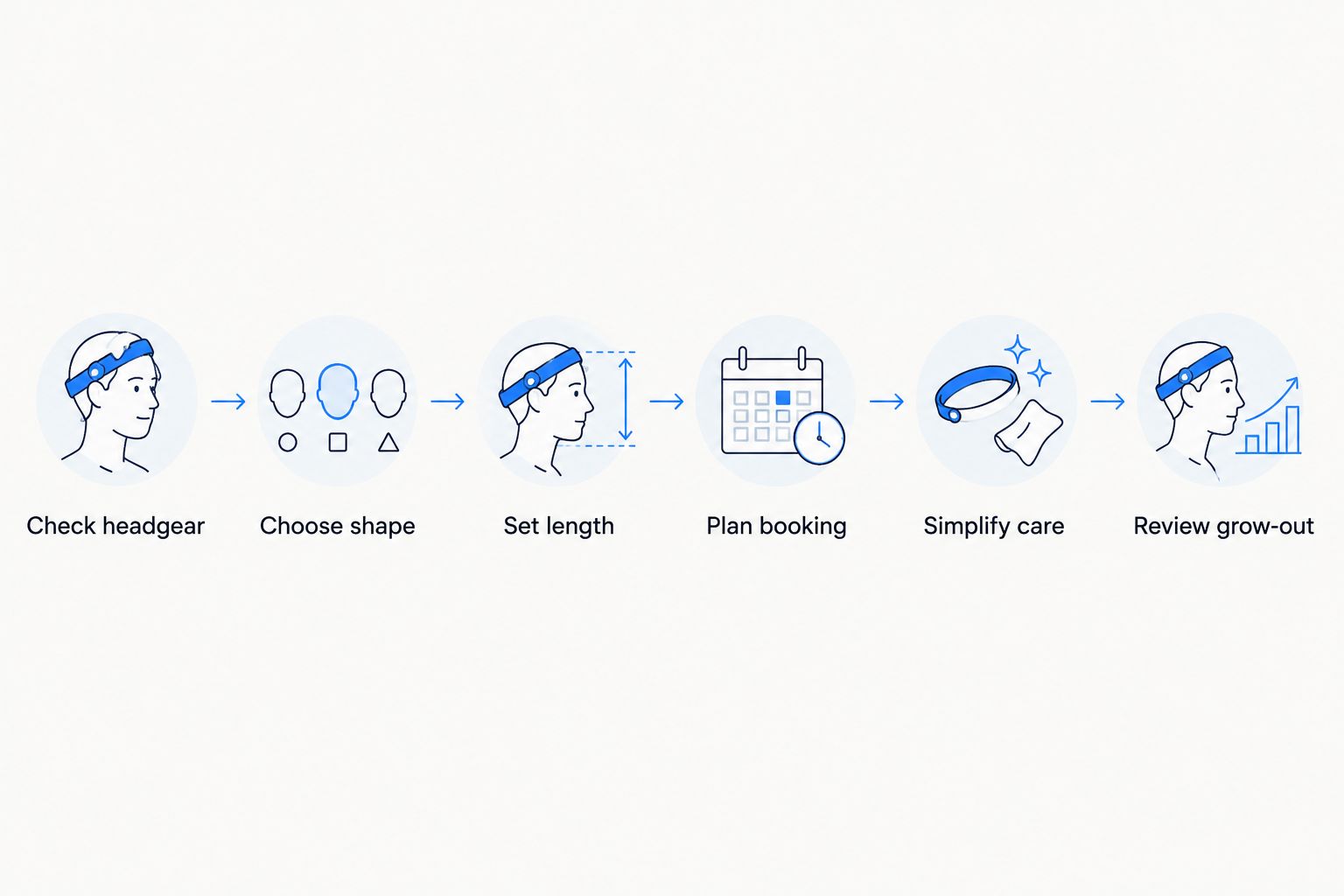
The sequence is simple: check your work setup, choose the shape, specify the length, arrange the visit, test the care routine, and review the result. Make each decision before moving to the next.
Compare haircut options for construction work
These options differ in shape and styling demands. None changes the requirements for protective equipment. Use the table to narrow your choice, then confirm the details with your barber.
| Option | Best for | Main advantage | Key limitation |
|---|---|---|---|
| Buzz cut | Workers who want very little styling | Keeps hair short throughout | Leaves less length for changing the shape or part |
| Crew cut | Workers who want a short cut with more top shape | Retains top length while keeping the sides shorter | The top still needs a length choice that suits your texture |
| Short textured crop | Workers who prefer a forward-facing shape | Gives the fringe a defined role in the cut | A fringe left too long still needs managing |
| Short taper | Workers who want a less abrupt change at the edges | Allows a gradual transition around the sides and neckline | Does not automatically remove bulk higher on the head |
| Skin fade with a short top | Workers who prefer strong contrast | Creates a distinct transition from exposed skin to longer hair | Regrowth changes the contrast and edge definition |
A buzz cut is the simplest starting point when your priority is minimal styling. Choose a crew cut or short taper when you want more shape, and specify enough detail to keep that shape manageable.
A skin fade is a finish choice, not a requirement for construction work. Choose it because you like the appearance, not because you expect it to improve helmet protection or replace correct fitting.
Common mistakes construction workers make
Asking for a work haircut without describing the workday
The phrase construction haircut does not tell a barber which length you want. Explain your headgear, fringe problems, and styling habits. Then ask for a particular shape with separate instructions for the top and sides.
Choosing the shortest setting automatically
Shorter is not always your preferred result. A very short cut exposes more of the scalp and leaves less room to adjust the shape. Confirm the actual cutting length before the barber starts, especially when changing from a longer style.
Treating a beard trim as respirator clearance
A neat beard is not automatically compatible with a tight-fitting respirator. OSHA’s respiratory protection standard, 29 CFR 1910.134, prohibits facial hair between the sealing surface and the face or hair that interferes with valve function. Follow your workplace respiratory protection program; a barber does not determine whether your respirator passes its required fit test.
Assuming today’s appointment is available
In 2026, make same-day plans from current booking information, not a general expectation. Confirm the appointment before traveling. If the timing does not fit your shift, select another confirmed time rather than squeezing the visit into an unworkable gap.
Copying a haircut without accounting for texture
A reference photo shows a finished look, not how it behaves on your hair. Ask which parts your barber can reproduce and which need adjustment. Preserve the feature you like without demanding the same length everywhere.
FAQ
What’s the best haircut for construction workers?
A buzz cut is a practical starting point for construction workers who want minimal styling. A crew cut or short taper suits workers who want more shape; choose the length around your hair texture and required headgear.
Is a fade better than a buzz cut for construction work?
A fade is not inherently better than a buzz cut for construction work. A fade describes a transition in length, while a buzz cut keeps hair short throughout; choose according to your preferred appearance and maintenance routine.
What should I tell my barber if I wear a hard hat?
Tell your barber where your hair bunches, falls forward, or needs reshaping after correctly worn headgear comes off. Specify the top length and side length separately, and do not alter protective equipment to accommodate the haircut.
What clipper guard should I ask for?
Choose a guard by its cutting length and the result you want, not by a universal construction-work recommendation. Common number 1, 2, and 4 guards cut to 1/8 inch, 1/4 inch, and 1/2 inch respectively; confirm the barber’s guard system before cutting.
Can I get a same-day haircut before my shift?
Arrange a same-day haircut only after confirming a current appointment that fits your shift. Account for travel and the service itself, and check the appointment details before leaving.
Can construction workers keep a beard when wearing a respirator?
Facial hair must not cross the seal or interfere with valve function on a tight-fitting respirator. Follow your workplace respiratory protection program and required fit testing; a beard trim alone does not establish a safe seal.
How often should I book another haircut?
Book another haircut when the length or shape stops working for your routine. Track the area that becomes inconvenient first and use that information to adjust your next cut rather than following an arbitrary interval.
One last thing
Before your next haircut in 2026, photograph your hair after removing correctly worn work headgear. That image shows the barber a practical problem a fresh styling photo does not: where the haircut loses its shape during your day.
Bring the problem, not just the inspiration. Ask for a cut that addresses the fringe, bulk, or edges you actually manage at work, while keeping the appearance you want off the clock.